At the meeting table we have blind spots
Communication scientist Jeffrey Hall investigated how much time people need to build real friendships. It takes more than 200 hours together to turn acquaintances into real confidants. That is together-time that colleagues who are new to each other do not yet share. Moreover, it is not only about the number of clock hours together behind a desk or at a meeting table. Whoever wants something to grow between people must take that relationship outside the fixed frameworks.
Professional trust, complementary collaboration, shared insight into each other’s strengths and blind spots, the willingness to hold each other to account: that does not arise by itself. Around the meeting table people meet each other within a narrow, predetermined framework: the agenda, the role, the problem to be solved. What else lives there, how someone thinks, what drives them, what they run into, what they need to work well together, stays out of view. Not because people deliberately hide it. But because the setting does not invite certain conversations. In many mergers you set up structures, teams, roles, mandates, consultation, while keeping fundamental blind spots about what will carry or break the collaboration.
Ask yourself: how many of those hours do you consciously plan outside those frameworks, for the people who will make your merger work every day?
Time to process, on more than one layer
A merger needs lead time. Just as good coffee is not brewed in a hurry: it needs time to steep, to let the flavours blend. It works the same way with people who find themselves in a new reality. That processing does not happen only in the head. It is also in the gut and the heart: the feeling of whether you belong, whether you are seen, whether you can subscribe to the new course.
Because people signed up to work for organisation X. Suddenly they work for organisation XY. That is no small shift. It is a re-contracting with the organisation, with new colleagues, with a new assignment. That re-contracting asks for room: to ask questions that have not yet been asked, to test whether what is expected is reasonable and workable, to relate themselves, individually and as a team, to the new reality. Whoever does not give that room gets silent disconnection in return.
Give that processing a place. Not in an extra information session, but in a different kind of time: informal, together, without a predetermined outcome. A body does not lie. What people can hide in a meeting room or do not yet know themselves comes to the surface in a different context. Not as weakness, but as information.
A different place makes different conversations possible
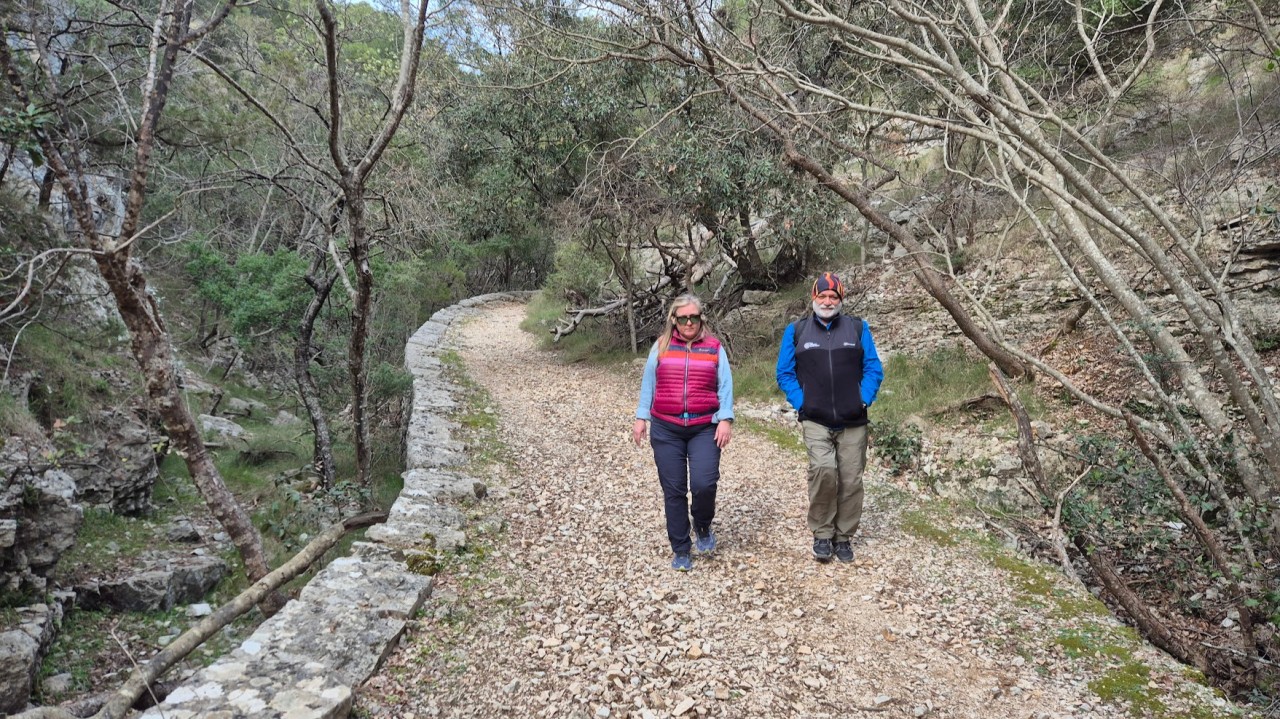
Taking people out of their familiar environment, literally outside, on unfamiliar ground, with something at stake, sets something in motion that does not work in a familiar space. Nature has no meeting structure, no hierarchy, no agenda. It asks for presence, collaboration and real choices. It confronts people with themselves and with each other in a way that sticks, long after the flipcharts have been rolled up and the catering has been cleared away.
That speeds up trust. And trust is the only soil in which collaboration in a merged organisation can grow. Not the organisation chart, not the new name above the door. Trust. That grows in shared hours, and it grows faster when those hours are somewhere other than where people have always been.
Staying overnight together is not a luxury. It is an investment with a bill that you will otherwise pay later: in silent disconnection, in profiles that leave, in a culture that does not become one.
A merger is only successful when the people who will make it happen also want to do so
They signed up for organisation X. Make sure they also want to sign up for organisation XY. That takes more than a good story and a new name above the door. That takes time together, real time, outside the agenda. Value them for that. Take them seriously, early enough.
Here is my previous post on M&A and mergers: https://www.linkedin.com/pulse/op-papier-mislukken-fusies-niet-kobe-smits-bu1qe/?trackingId=hX8CnjiASfm9y%2BIdnf82rg%3D%3D
Source: Jeffrey Hall, How many hours does it take to make a friend?, Journal of Social and Personal Relationships, 2018.
I trained as a psychologist. As director of a reception centre for refugees at Fedasil, as a trainer and consultant in Ethiopia, and now as Executive Director of Outward Bound Belgium. What drives, connects and sometimes holds people back: that is what I like to stay curious about. From boardroom to rock face, the common thread in my life is how we can remain human in a world that is spinning out of control. And how searching leaders with strong shoulders can contribute to that. With this newsletter I think out loud about how we can cherish that human measure in teams, in organisations and in society.