ADVENTURE THERAPY
PSYCHOTHERAPY AND COUNSELLING IN OUTDOOR AND ADVENTURE SETTINGS
The innovative strength of this training is fuelled by the synergy between Focus on Emotion and Outward Bound Belgium.
WHY TAKE THIS TRAINING?
With your therapeutic background and passion for what nature, the outdoors and adventure have to offer, you further develop your skills during this training. This enables you to guide therapeutic processes with more confidence — individually, in groups or in families — in outdoor and adventurous settings, suited to your own work context.
You broaden your therapeutic horizon and can take the adventure further with the people you work with.
WHAT and HOW
The specialisation year deliberately focuses on using and shaping (adventurous) activities in nature as a working tool for different kinds of support: within professional care, in intensive personal programs, and in group programs such as therapy groups and families. Methodologically we think of: therapeutic walking conversations or walking coaching, multi-day therapeutic treks, working on rope courses or with adventurous activities in nature (rock climbing, river descents, cave exploration, ...), active collaboration assignments, ...
We address psychotherapists, counsellors, coaches or people who, through their experience in this field, can be considered equivalent.
We do not offer a technical ‘skills’ training, nor a basic training in helping skills. The training does focus specifically on the therapeutic potential present at this intersection. We actively explore how it can be applied, deepened and enriched, and what is needed for this, both methodologically and in terms of interventions.
CONTENT and WAY OF WORKING
All our training modules are designed as multi-day residential clusters.
The training year begins with a four-day experiential immersion in the subject. From the client's position you experience a number of different ways of working first-hand. At the same time, the necessary building blocks and frames of reference become visible that will feed the following three-day modules.
At the start of the first three-day module we reflect on the different learning questions that the four-day experience raised. On that basis we refine part of the rest of the training program together, tailored to the participant group.
The four residential three-day training modules are built up from the following parts:
THE THEMES IN MORE DETAIL
OUTDOOR AND ADVENTURE THERAPY: POSITIONING, DEMARCATION AND DISTINCTIVENESS
How do Adventure and Outdoor Therapy position themselves within, on the one hand, the broader field of experiential learning and, on the other, the different psychotherapeutic schools? What do we mean by this term in an international context and what forms has it taken in Flanders and the Netherlands?
Within this theme we also draw the ‘map’ of Outdoor Therapy: what networks and partnerships exist, where do we find research results, what literature is available, where are the border areas, what is typical of Outdoor Therapy?
CONTEXT AND UPROOTING
Life questions and personal struggles cannot be seen apart from what has been passed on and received over generations.
At the same time, every change in the human life cycle brings movement, however small.
Context is the total environment in which something acquires meaning.
Sometimes contact with family is broken, stuck, hopeless, clouded or extremely fragile, all chances have been used up and rest and distance are needed. The relationship may be broken or given up, a person may be homeless, without a home or place of their own. This burden can weigh very heavily, sometimes on shoulders that are too light. It can also be valuable to break with the familiar environment for a while, to take distance from your own past in order to regain a grip on your further life and future.
Together we explore how we can use these two poles in Adventure and Outdoor Therapy to help people grow, restoratively and preventively, as individuals, as families and as a community.
BASIC CONDITIONS AND PRECONDITIONS OF OUTDOOR AND ADVENTURE THERAPY
Adventure therapy is a way of working that requires specific knowledge and skills, both from the facilitator (and their framework) and from the client. Different from therapy or counselling in a consulting room.
While deepening the themes we reflect on the required (also non-therapeutic) skills of the facilitator. Adventure Therapy brings risks with it, physical as well as mental and emotional. We examine the basic conditions that both therapist/facilitator and client must meet. We also explore the preconditions that must be observed to arrive at a safe Outdoor Therapy session and a workable transfer to daily life.
Different target groups in turn require specific points of attention. Using the target groups worked with within the training group, we want to reflect on these specific needs.
METAPHORS, RITUALS, PROJECTIONS AND SYMBOLISATIONS
Many expressions and proverbs originate in being active and physical, in nature or otherwise. This makes them an ideal starting point for co-creating strong and supportive metaphors and rituals, and they can make it easier to integrate the learning experiences gained. During the training we offer different frameworks and methods to use these powerful working tools with different target groups.
Nature is at the same time a grateful projection screen for what, at the start, we cannot yet accept as belonging to ourselves and want to place outside ourselves.
We explore ways of working with this with our clients, making these projections visible to them and facilitating their reclaiming.
WORKING WITH THE BODY
Adventure Therapy is an active way of working in which we often get physically involved with clients. We walk, go on treks, climb, canoe, … We put our whole ‘being’ into the action: body and mind. That inevitably also evokes physical sensations. These bodily experiences are enormously powerful and cannot be denied. How can we handle this physical feeling in order to arrive at a therapeutic process?
We often deal with clients who have a difficult relationship with their body. Adventure Therapy can be a very powerful, but not risk-free, working tool here.
BY WHOM?
The permanent trainers of this program are Lynn Van Hoof, Roel Desart and Luk Peeters. They will be present in alternation and sometimes in pairs.
Depending on the specific training questions as explored at the start of the first three-day module, Belgian and international guest lecturers with specific expertise can also be brought in, ‘live’ where possible or otherwise via a ‘webinar’.
Lynn Van Hoof
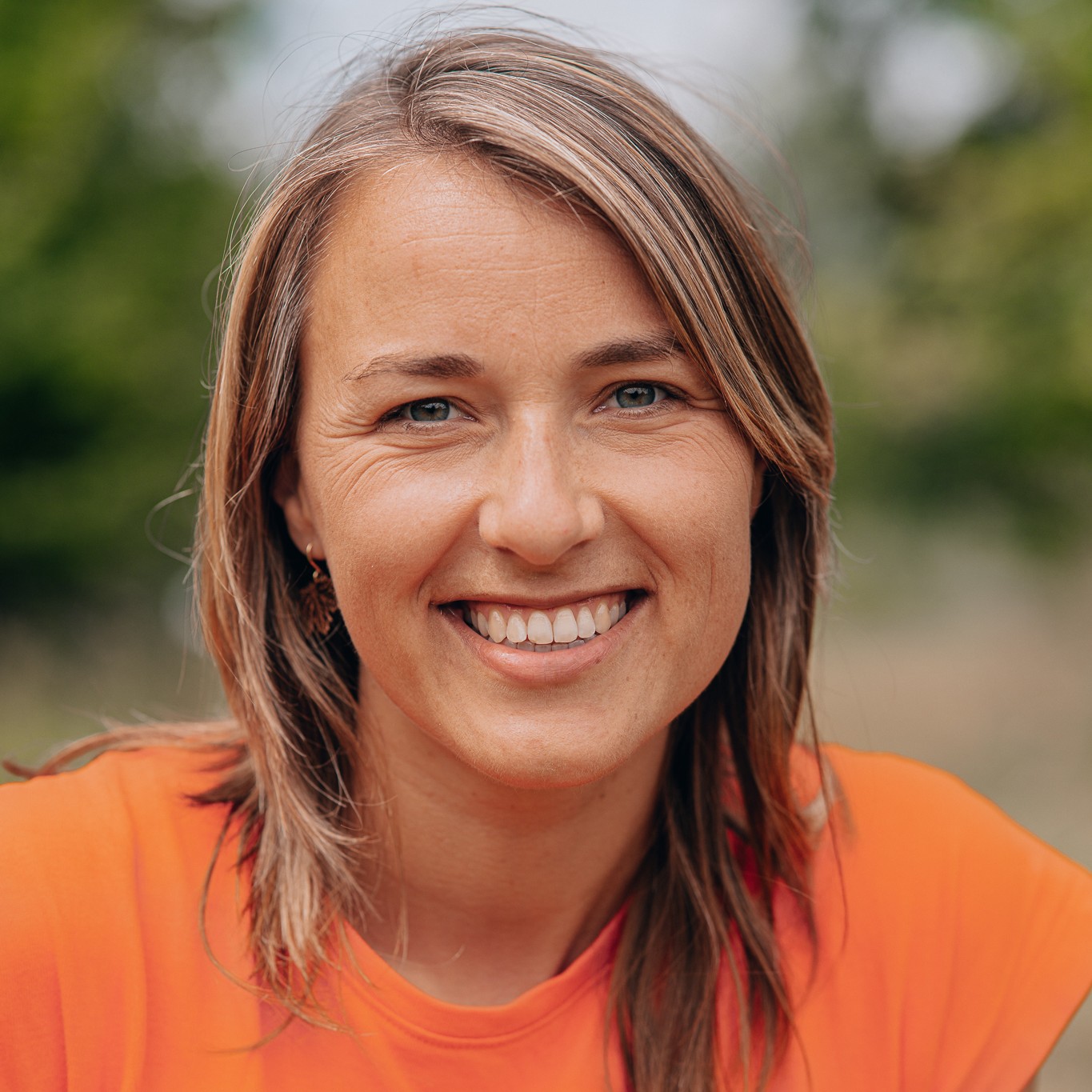
Lynn has worked with outdoor experiential learning since 2010. First in a time-out project in specialised youth care, then at NATURE, giving experiential learning training within CLB Antwerp, and since 2018 at Outward Bound Belgium. She has a great passion for guiding groups, but in her own practice she also regularly guides 1-on-1 walking sessions. She also works as a student psychologist at Karel de Grote University College, where she also organises therapeutic walks for students. By training she is a clinical psychologist, Client-Centred and Emotion-Focused therapist, with a specialisation in group therapy.Lynn was for a long time the Belgian representative for the international and European network and coordinated a partnership project from which the first GATE (and the European network) emerged in 2017. She likes to bring people together and is committed to the further development of outdoor therapy and counselling in Belgium, Europe and the world.
For Outward Bound Lynn is a senior outdoor trainer and for Focus On Emotion she is a supervisor (in training) and co-coordinator of this training.
Roel Desart

Roel has been involved in experiential education and training since ’94. First as a volunteer in youth work (Scouts & Guides) and since 2000 as a professional outdoor trainer at Outward Bound.
Guiding individuals and teams in both profit and non-profit has been a common thread throughout his career. He especially enjoys being able to do this in an international and multicultural context too. For example, he guided young employees of Croix Rouge France for years during a 7-day program on personal leadership.
Through his own organisation (Inspiratiekracht) he regularly guides teams and individuals in a wide range of contexts, including youth psychiatry and home-based support. This guidance takes place at the intersection of coaching and therapy.
Roel is a translator by training and obtained a Master in Education (formerly GPB training), he is a Gestalt therapist (IVC) and certified coach (Jef Clement, Inspirerend Coachen). He followed the year-long training on family constellations (Vidende) as well as the training in systemic coaching of teams and organisations.
For Outward Bound he is a senior outdoor trainer and a member of the General Assembly. For Focus on Emotion he is a staff member.
Luk Peeters
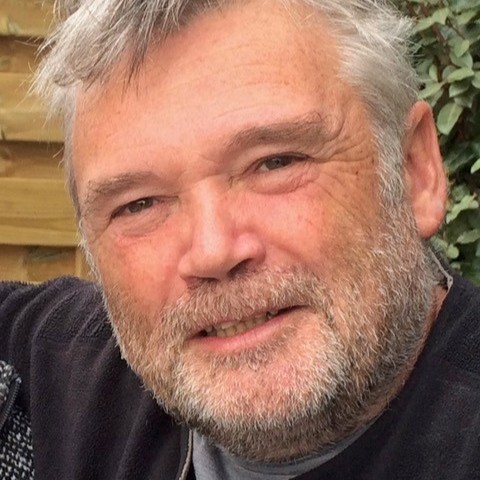
Luk has been active in the experiential outdoor world since 1985. For many years he guided Outward Bound and City Bound projects for young people from Special Youth Care and training programs for their facilitators. He was co-founder of Exponent, the firm that helped launch the concept of ‘rope courses’ in Europe, and explored there the possibilities of working with special target groups, such as people with ABI (acquired brain injury).
For a long time he has been passionately involved in the international developments of outdoor and Adventure Therapy. He guided therapeutic ‘walkshops’ before and after the various international conferences, presented workshops and lectures there and wrote a number of articles about it. For a time he was also co-chair of the international committee (ATIC, now IAANT) that coordinates these developments.
Luk studied Social Agogics and is a Gestalt and Client-Centred therapist, with specialisations in existential and in group therapy. He is a guest lecturer in the postgraduate course ‘experiential development in groups’ at UCLL and in several other international programs.
For Focus On Emotion he is a staff member of the Group Therapy specialisation year and coordinator/trainer of this training . For Outward Bound, Luk has guided and trained a great variety of target groups as a trainer over the past 40 years.
PRACTICAL INFORMATION
Location
Outward Bound training centre in Varoy castle at Anhée
Language of instruction
Dutch
Price
Registration fee 3000 euro
Accommodation and meals: 1685 euro
These include accommodation in single or double rooms with private bathroom, meals, use of the activity grounds, materials and equipment and transport on site, and the cost of insurance. Camping is allowed, on the same terms.
REGISTRATION and INFO
Interested in this training? Then submit your details via this link (google form) and send an email to luk.peeters@focusonemotion.be so that we can contact you for an introductory conversation.
Information about payments and invoices