In mijn eerste blog over AI schreef ik over regie: wie beslist waarvoor we AI inzetten? In deze tweede blog schrijf ik over wat er tussen mensen verdwijnt als die vraag niet gesteld wordt.
What I saw out in the field
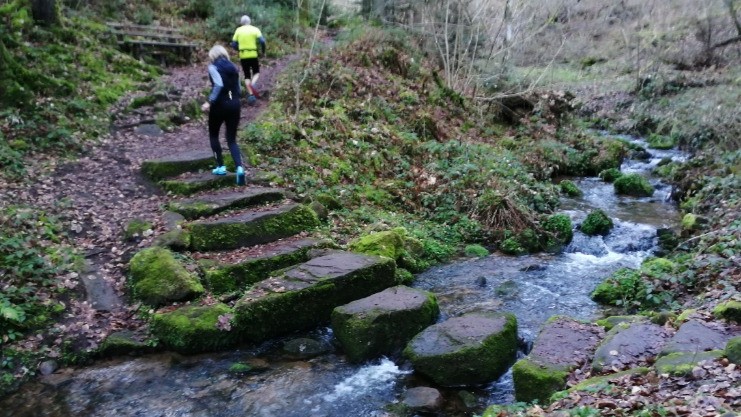
I was in a program with a group of managers. Outside, on the grounds, where the rules of the office do not apply. The assignment was clear. The resources were scarce. The group had to decide for themselves how.
After just a few minutes someone took out his phone. AI was brought in. Within no time there was a plan. Efficient, logical, correct.
But half of the group had hardly been part of it. No friction, no doubt, no conversation about what they actually wanted to achieve. The problem was solved. The team had not solved it.
Afterwards I asked what they had gained. Time, they said.
What they had lost was harder to put into words. But they did feel it.
What disappears between people
The debate about AI revolves largely around possibilities and effects on the individual: intellectual laziness creeping in, cognitive overload, the fatigue of constantly learning new systems. Those are real effects.
But there is a question we almost never ask.
What does the use of AI do to what happens between people? Or more precisely: to what no longer happens?
That question is not about speed. It is about the conversations that drop away, the friction that disappears, the shared search that is replaced by an individual search query.
People who switched to AI early report less connection with colleagues, despite higher engagement in their own work. They work harder. They understand each other less. More than 40% of employees say they regularly feel exhausted. More than 60% would change employer for better support of their well-being. Exhaustion is rarely about pace. It is about loss of meaning.
What teams lose while they win
There is a concept in group dynamics that applies here: process loss. A group always performs less than the sum of its individual capacities. Working together costs energy, and that loss has to be actively managed. Good teams invest in mutual alignment, in shared understanding, in trust.
AI speeds up task execution. It does not solve process loss. It makes it invisible. The conversation that used to take two hours and from which six people emerged with the same understanding is replaced by a summary that nobody really made together.
Teamwork has three axes: what we achieve, how we collaborate, and who we are to each other. The three feed each other. AI does not affect these three axes equally. It speeds up the first. The second and third fall outside its reach. What we gain on the task, we silently pay back on process and relationship.
And here is a mechanism that is rarely named. AI produces the average of everything it has seen. That is useful for tasks where average is good enough. Teams that also delegate their strengths (such as their knowledge of context, their judgement, their relational capital) trade their distinctiveness for the middle of the pack.
“What they gain in speed, they pay back in identity.”
On the shoulders of giants, standing on your own feet
We stand on the shoulders of giants. Everything AI can do today is built on the hard thinking and searching of generations of people before us. That is a gift. We are free to build on it.
And yet. The muscle you do not use goes slack. Whoever never walks any more because the car is faster loses fitness. Whoever never searches and struggles for themselves any more loses the skill of thinking in uncertainty. If we delegate the hard searching entirely to machines, we also delegate the exercise that this work gave us.
In our field we call this productive discomfort: the discomfort that does something. That forces you to think, to search, to clash with another opinion. The discomfort that is needed to get further than where you already were.
AI largely takes that discomfort away. Our chatbots are efficient, friendly and without judgement. And that is sometimes exactly what you need. But if it becomes the only way you work, something disappears that you only miss once it is gone.
Innovation needs friction. A stone only becomes smooth through rubbing against another stone. An idea only becomes sharp through resistance from another perspective. A team only becomes strong through the moments when it almost does not work but keeps going anyway. It is exactly that space that we need to protect.
The choice underneath
Leaders who are trained in challenging, uncertain environments are demonstrably more effective afterwards in decision-making under pressure. Organisations that invest in experiential learning see it back in retention and resilience. Those are tangible consequences of a choice that most organisations do not make consciously.
As a manager you have a role in this: asking the questions the machine does not ask.
Which muscles do we want to keep training?
What do we delegate to the machine, and what do we consciously keep with people?
Where do we organise the productive discomfort that keeps our teams sharp?
Because what becomes scarce is the skill of asking the right question to your team, to your customer, to the technology itself. Leaders who cultivate that build organisations that learn faster than the technology evolves. And that is the only advantage that is lasting.
Those choices presuppose something AI does not organise: room for shared reflection on how we work, not only on what we produce. Room for the friction that gives shine. Room for the discomfort that makes teams stronger.
That is precisely the exercise Outward Bound has been organising for fifty years: outside, with something at stake, in a context that makes what really happens between people visible too. The discomfort is the method. Helping people stand stronger is the goal.
Stay Human.
I am Kobe. I trained as a psychologist. As director of a reception centre for refugees at Fedasil, as a trainer and consultant in Ethiopia, and now as Executive Director of Outward Bound Belgium. What drives, connects and sometimes holds people back: that is what I like to stay curious about. From boardroom to rock face, the common thread in my life is how we can remain human in a world that is spinning out of control.
Sources
Raza, A. et al. (2024). Examining the Double-Edged Sword Effect of AI Usage on Work Engagement. PMC. pmc.ncbi.nlm.nih.gov/articles/PMC11852299/
Deloitte Insights (2024). Leading workplace well-being. deloitte.com/us/en/insights/topics/talent/workplace-well-being-research-2024.html
Steiner, I.D. (1972). Group process and productivity. Academic Press.
Schein, E.H. (1988). Process Consultation. Addison-Wesley. Hovelynck, J. (2001). Beyond didactics: a reconnaissance of experiential facilitation. Australian Journal of Outdoor Education.
Woolley, K. & Fishbach, A. (2022). Embracing Discomfort as a Signal of Learning. Psychological Science. Vygotsky, L.S. (1978). Mind in Society. Harvard University Press.
Van Hees, P. (2026). The Rise of the Second Self. AI5050, 31 March 2026. ai5050.com/timetable/event/the-rise-of-the-second-self-ai-agents-will-rewrite-work-markets-careers-and-you/
Decock, N. (2026). Het Einde van de Human-Only Workforce. AI5050, 31 March 2026. ai5050.com/timetable/event/het-einde-van-de-human-only-workforce/
Buyssens, V. (2026). Navigating Intelligence. AI5050, 31 March 2026. ai5050.com/timetable/event/navigating-intelligence/
Chabot, N. (2026). Curiosity Is the New Competitive Advantage. AI5050, 31 March 2026. ai5050.com/timetable/event/curiosity-is-the-new-competitive-advantage/